
Summary:
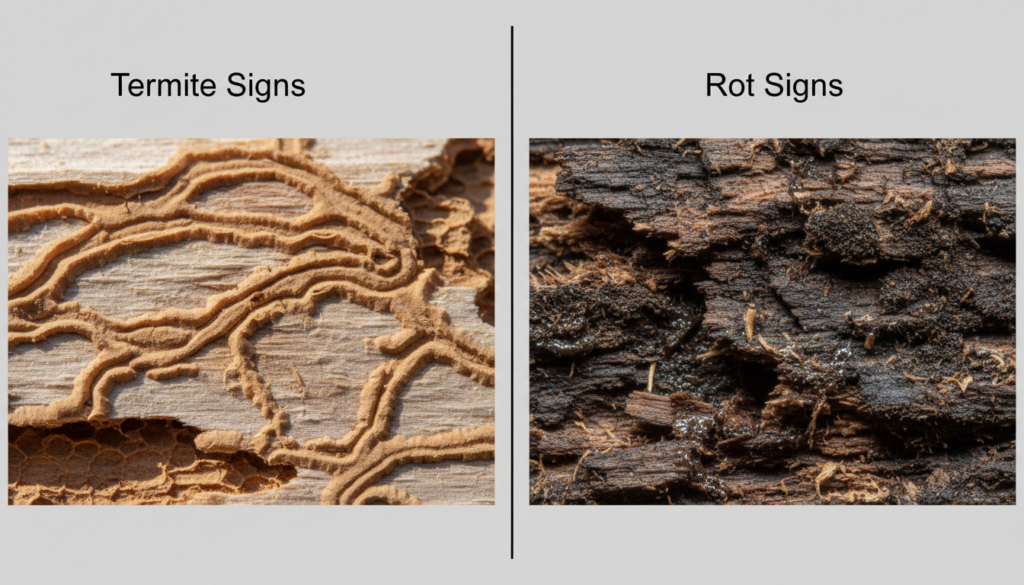
If you’re seeing damaged wood in your Arkansas home, the big question is whether it’s termites or moisture-driven wood rot. Termites usually leave hollow wood, mud tubes, and fine “sawdust-like” frass. Wood rot usually shows up where moisture hangs around and creates soft, crumbly, spongy wood and often a musty smell. The fastest way to stop the damage (and avoid paying twice) is to identify the cause, fix the moisture or infestation, then repair the structure correctly.
Why termite damage and wood rot get confused
Both problems can make wood look “chewed up,” warped, or weak. And in Arkansas, we see plenty of the conditions that encourage both: humidity, seasonal storms, wet crawl spaces, and homes where drainage issues quietly soak structural wood for years.
But here’s the catch:
- Termites are an infestation problem (a living organism damaging wood).
- Wood rot is a moisture problem (fungus breaking down wood because it stays wet long enough).
If you repair wood without solving the cause, the damage just comes back.
Fast visual differences (quick cheat sheet)
Use this as a quick “first pass” before the deeper checklist.
More likely termites if you see:
- Mud tubes (thin dirt tunnels) on foundation walls or piers
- Wood that sounds hollow when tapped
- “Blistered” paint that looks like water damage, but the wood underneath is hollowed
- Frass (termite droppings) that looks like tiny pellets or sand-like granules (more common with drywood termites)
- Swarming season evidence: discarded wings near windowsills or lights
More likely wood rot if you see:
- Wood that’s soft, spongy, or crumbles when poked
- Dark staining or a musty smell near the damage
- Damage concentrated around leaks, wet soil, or poor airflow areas
- Nearby mold growth or consistent condensation
- Metal fasteners showing rust from long-term moisture
Homeowner checklist: termite clues
Walk through these one by one. If you’re checking a crawl space, do it like we would do and use a flashlight. Look slowly.
1. Mud tubes
Look along foundation walls, piers, sill plates, and anywhere wood meets masonry. Mud tubes are basically termite “highways” that protect them from drying out.
2. Hollow wood test
Tap wood with the handle of a screwdriver. Termite-damaged wood often sounds hollow. If you push with a screwdriver and it breaks through easily, that’s a major red flag.
3. Swarm evidence
In Arkansas, termite swarms often happen when temperatures rise and humidity is up. If you see small wings near windows, light fixtures, or door frames, take that seriously.
4. Damage pattern
Termites eat wood from the inside out. So wood might look okay on the surface but be hollow underneath.
5. “Maze” or gallery patterns
If you can see the interior of damaged wood, termites often leave winding, layered tunnels.
6. Nearby moisture (yes, termites love it too)
Termites are often worse when moisture is present. So termite signs + damp crawl space can be a double problem.
Homeowner checklist: wood rot clues
Wood rot is usually telling you: “This stayed wet too long.”
1. The poke test
Rotten wood gives way. It can feel spongy, fibrous, or crumbly.
2. Look for the moisture source
Check for:
- plumbing leaks
- AC condensate issues
- poor grading
- downspouts dumping water near the foundation
- crawl space humidity / missing vapor barrier
- roof leaks that run down framing
3. Color and texture
Rot often shows dark discoloration. In advanced cases, wood looks “stringy” or flakes apart.
4. Smell matters
A musty odor is a strong clue that moisture has been persistent.
5. Where it’s happening
Rot clusters around wet zones: rim joists, sill plates, subfloor edges near exterior walls, around windows/doors, and anywhere water consistently sits.
High-risk spots around Arkansas homes
If you’re not sure where to look, start here:
- Crawl space perimeter: sill plate, band/rim joist, joist ends
- Under bathrooms/kitchens: slow leaks do major long-term rot
- Around exterior doors: flashing issues + water intrusion = rot
- Deck ledger boards: a classic rot zone if not flashed correctly
- Garage-to-house transitions: water and framing intersections
- Around downspouts: especially if water dumps right at the foundation
- Behind gutters: overflow can soak fascia and framing
What to do next (and what not to do)
This is where homeowners often waste money, so here’s the clean sequence.
Step 1: Identify the cause before you repair
- If it’s termites: treat/resolve the infestation first.
- If it’s rot: fix the moisture source and improve drying conditions.
Step 2: Determine if structural wood is compromised
Cosmetic trim is one thing. But if your sill plate, rim joist, beams, or floor system are damaged, you need a real repair plan.
Step 3: Don’t just “sister” or patch without assessing
Sometimes adding wood next to damaged wood works — sometimes it hides a bigger problem. The best repair is the one that restores load-bearing integrity.
Step 4: Control water long-term
Even after repairs:
- extend downspouts
- correct grading
- improve crawl space moisture control
- keep gutters flowing
If you’re at the point where you’re searching for a termite damage repair contractor, that’s usually a sign you want someone who can assess the structure and fix it correctly — not just make it look better for a month.
Need Help? We’re Here for You
If you’re dealing with damaged wood, the fastest way to protect your home is to identify whether you’re looking at termites, wood rot, or both, then fix the root cause before repairs. If you’re in Arkansas and want a clear answer — plus a repair plan you can trust.
Reach out to Smouse Bros to schedule an evaluation with a termite damage repair contractor who can assess the structure, explain your options, and help you stop the damage from spreading.
Questions About Termite Damage and Wood Rot
How can I tell if it’s termites or wood rot?
Termites often leave hollow wood and mud tubes. Rot usually creates soft, crumbling wood and is tied to a clear moisture source. When in doubt, get an inspection — misdiagnosing this is expensive.
Can termites cause wood rot?
Termites don’t “cause” rot, but moisture conditions that allow rot can also attract termites. It’s common to see both when crawl spaces stay damp.
Is wood rot always serious?
Not always. Small trim rot is common. But rot in sill plates, rim joists, floor joists, or beams can become a safety issue and should be evaluated quickly.
Should I fix the damage before treating termites?
Usually no. Treat first, then repair. Otherwise you risk repairing wood that gets re-damaged.
How much does termite or rot repair cost?
It depends on how deep the damage goes and whether structural members need replacement. The price range can be wide — which is exactly why inspection and scope matter.
Glossary
- Sill plate: Wood board sitting on top of the foundation that supports the framing
- Rim joist (band board): Framing board around the perimeter of floor joists
- Joist: Horizontal framing supporting floors
- Frass: Insect droppings; certain termites leave pellet-like frass
- Mud tube: Termite tunnel made of soil and saliva for moisture protection
- Wood rot: Fungal decay that breaks down wood when moisture stays high
- Structural repair: Repair that restores load-bearing strength, not just appearance