
Summary:
- In Arkansas, foundations take a beating from rain, dry spells, heat cycles, and shifting soils.
- Your best prevention strategy is boring-but-effective: control drainage, keep moisture around the foundation consistent, and spot changes early.
- If you’re seeing cracks, sticking doors/windows, sloping floors, or recurring water near the home, start with a professional evaluation via Foundation Repair Arkansas.
Why Arkansas foundations need seasonal maintenance
Arkansas homes see wide swings throughout the year: wet stretches, dry stretches, and temperature shifts that change how soil holds (or releases) water. That matters because foundation movement is often driven by changes in soil moisture.
In parts of Arkansas, expansive clay soils can swell when wet and shrink when they dry. That shrink/swell cycle can stress foundations over time, which is why consistent drainage and moisture control is such a big deal.
If you’re already seeing symptoms, don’t guess. Start with a professional evaluation here: Smouse Bros Foundation Repair Arkansas.
Early warning signs to watch for
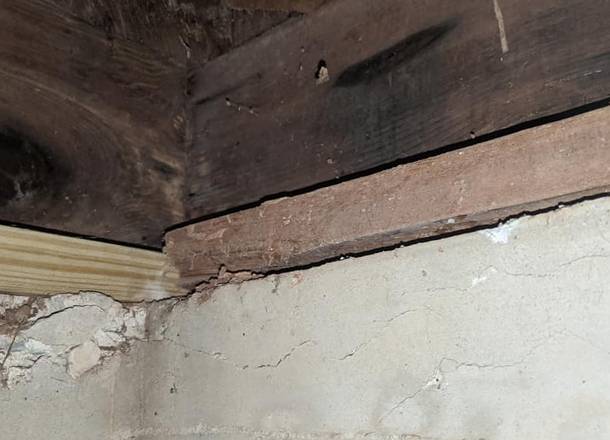
- Cracks in drywall, brick, foundation walls, or around openings
- Doors/windows sticking or suddenly not latching
- Uneven floors or a new “slope” feeling
- Gaps between trim and walls, or separation at corners
- Pooling water near the foundation line after rain
One crack doesn’t automatically mean catastrophe. The goal is to notice trends: new cracks, widening cracks, repeated water patterns, or multiple symptoms at once.
Spring checklist (rain season prep)
- Clean gutters and confirm downspouts are working (overflow is a foundation problem in disguise).
- Extend downspouts away from the house so roof water doesn’t saturate the perimeter.
- Walk the perimeter after a heavy rain and note puddling or soft spots near the foundation.
- Check crawl space humidity (if applicable) and look for damp insulation or musty odors.
- Take crack photos so you can compare month to month.
Summer checklist (drought + heat cycle defense)
In dry stretches, soil can shrink away from the foundation and contribute to settling or movement. The goal isn’t to ”soak the house.” It’s to avoid extreme swings.
- Keep moisture more consistent around the foundation perimeter (avoid dramatic wet/dry cycling).
- Watch for soil pulling away from the foundation or corners.
- Be cautious with sprinklers: don’t create one saturated zone next to one dry zone.
- Monitor trees and large shrubs near the home (roots and water demand can change soil moisture patterns).
Fall checklist (set up drainage before winter weather)
- Clear leaves from gutters and verify water flows freely through downspouts.
- Check grading and touch up low spots so water sheds away from the home.
- Inspect crawl space access and vents for gaps that let moisture and pests in.
- Re-check cracks you photographed earlier and note any changes.
Winter checklist (small checks that prevent big surprises)
- Keep drainage paths clear so winter precipitation doesn’t pond at the foundation line.
- Watch for interior signs (new drywall cracks, sticking doors) during temperature swings.
- Test your sump pump if your home relies on one for groundwater control.
People Also Ask: quick answers
What causes foundation problems in Arkansas?
Often a combination of water management issues (roof runoff, poor grading), seasonal moisture swings, and soil movement (including expansive clays in some areas).
Should I water my foundation in the summer?
The reason people do this is to reduce extreme moisture swings in shrink/swell soils. The safe approach is consistency, not overwatering. If you’re unsure, a pro can advise based on your soil type and foundation style.
How do I know if a foundation crack is serious?
Cracks that are growing, widening, repeated in multiple areas, or paired with other symptoms (sticking doors, uneven floors, water intrusion) are worth a professional look.
When should I call a foundation repair professional?
If you’re seeing multiple warning signs, recurring water near the foundation line, or you’re unsure what you’re looking at, an inspection can save you from guessing (and wasting money on the wrong fix).
Glossary
Expansive soil
Soil (often clay-rich) that swells when wet and shrinks when dry, which can drive foundation movement.
Grading
The slope of soil around your home. Proper grading moves water away from the foundation.
Differential settlement
When one part of the foundation moves more than another, often showing up as cracks or uneven floors.
Pier-and-beam
A foundation style supported by piers with beams underneath the structure, often with a crawl space.
Concrete slab
A foundation style where the home sits on a poured concrete slab.
Sources
- Arkansas Office of the State Geologist – Expansive Soils (background on shrink/swell behavior)
- ASCE Geo-Institute – Design of Residential Structures on Expansive Soil (standards page) (general reference)